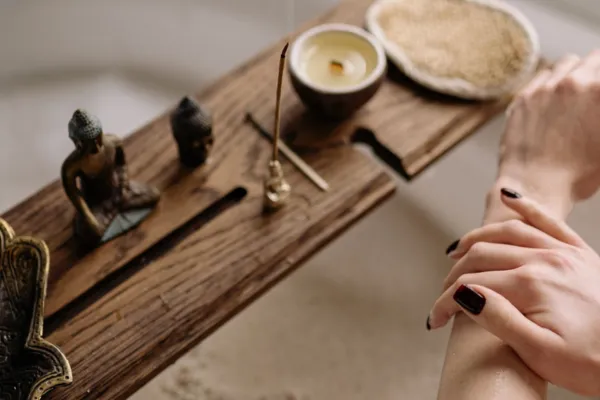
Self-Care Isn’t Just Bubble Baths (And what really works)
We all hear it: “Take care of yourself. Get a massage. Take a bath.”
But real self-care isn’t just indulgence—it’s about practices that support your nervous system, mental clarity, and overall well-being. Especially when life feels overwhelming or you’re navigating change, deeper self-care can be transformative.
Here’s what science says actually works.
1. Mindful Movement Calms the Nervous System
Gentle movement—like yoga, stretching, or slow walking—does more than tone muscles.
Research shows yoga and mindful movement reduce cortisol, the body’s stress hormone, helping the nervous system shift from “fight or flight” to rest and recovery (Li & Goldsmith, 2012).
Even 5–10 minutes of simple stretching or breath-coordinated movement can improve mood and energy (Field, 2011).
Practical tip:Try a few gentle stretches in the morning, or a restorative pose in the evening to release tension.
2. Journaling Supports Mental Clarity
Writing down thoughts isn’t just reflective—it’s therapeutic.
Studies indicate that expressive writing reduces stress and improves emotional processing, helping people cope with transitions and uncertainty (Pennebaker & Seagal, 1999).
Journaling helps externalize worries and creates space for insight, which is particularly useful when you’re at a life pivot.
Practical tip:Each morning, write down one question you’re exploring or one intention for your day. Even 5 minutes can help center your mind.
3. Restorative Practices Boost Energy and Focus
True self-care isn’t constant activity—it’s alsorest and recovery.
Practices like Yoga Nidra or guided relaxation have been shown to lower heart rate, reduce anxiety, and improve sleep quality (Khalsa, 2004).
Deep rest supports both emotional resilience and creative problem-solving—exactly what you need when life feels uncertain.
Practical tip:Set aside 10–20 minutes in the evening to lie down, follow a guided relaxation, or simply breathe deeply.
Putting It All Together
Effective self-care combines movement, reflection, and rest. That’s why we designed The Threshold: Your FREE 3-day At-Home Retreat—so you can try these evidence-backed practices in a gentle, guided way.
Over three days, you’ll:
- Release stress and overwhelm
- Reconnect with your intuition and inner wisdom
- Create space for calm and clarity
- Gain perspective on your next steps
All at your own pace, in the comfort of your home.
Ready to experience it? Download your free 3-day retreat guide here:https://vikasanaretreats.com/at-home-retreat
References
Li, A., & Goldsmith, C. (2012). The effects of yoga on stress and anxiety.Journal of Evidence-Based Complementary & Alternative Medicine.
Field, T. (2011). Yoga clinical research review.Complementary Therapies in Clinical Practice.
Pennebaker, J. W., & Seagal, J. D. (1999). Forming a story: The health benefits of narrative.Journal of Clinical Psychology.
Khalsa, S. B. S. (2004). Yoga for psychiatry and mental health.Psychiatric Clinics of North America
